Molekulare und modulare Materialien und ihre Anwendung in der Photonik
- Lehrende(r): Frank Marlow
Kursbereich: Experimentalphysik
Molekulare und modulare Materialien und ihre Anwendung in der Photonik
Liebe Studierende,
aufgrund der aktuellen Situation wird das Seminar "PHWIII - Kolloquium für Masterkandidaten" ab dem Vorlesungsbeginn, am 20.04.20, auf unbestimmte Zeit online stattfinden.
Die Veranstaltung wird im Sinne eines Webinars über die Plattform Microsoft Teams stattfinden.
Um am Seminar online über MS-Teams teilnehmen zu können, ist es zwingend notwendig, dass Sie sich vorab ein Microsoft Office 365 Konto anlegen (für Studenten kostenlos) und das MS-Teams Programm downloaden. Am Montag, den 20.04.2020, werden Sie von mir über Ihre Uni Mail Adresse zum MS-Teamraum eingeladen.
Eine Anleitung für das gesamte Vorgehen in MS-Teams finden Sie anhängend!
Damit die Online-Lehre zur ersten Seminarsitzung problemlos starten kann bitten wir Sie, sich mit dem System und den Funktionalitäten eingehend auseinanderzusetzen. Überprüfen Sie im Voraus ob:
Sollten bei einem der aufgeführten Punkte und trotz des korrekten Befolgens der Anleitung zu MS-Teams dennoch (technische) Probleme auftreten, erhalten Sie Hilfestellungen über diesen Link https://support.office.com/de-de/teams, über entsprechende YouTube Tutorials oder informieren Sie mich per Mail!
Die erste Seminarsitzung PHW III wird am 23.04.2020 zur festgesetzten Zeit um 14:00 Uhr (st) stattfinden. Im entsprechenden MS-Teamraum (SS_2020: PHW III (Masterseminar Professor Münk) werde ich eine Besprechung starten, an der Sie teilnehmen sollten. Wie Sie an einer Besprechung in Teams teilnehmen können, erfahren Sie ebenfalls in der anhängenden Anleitung.
In der ersten Sitzung werden alle weiteren Details zur (Online-)Struktur des Seminars sowie zu den Formalia bekanntgegeben.
Der Seminarablauf ist so geplant, dass in jeder Sitzung jeweils drei Teilnehmer Ihre Masterarbeit bzw. die relevanten Probleme, die bei der Erstellung aufgetaucht sind, in je 15 Minuten vorstellen, um und diskutieren
First edition of Science Education published with Springer Nature.
01. Introduction
Hans E. Fischer, Raimund Girwidz and David F. Treagust
Abstract
Building on its German edition, Physics Education is a profoundly important textbook for student teachers, in-service teachers and teacher educators in the field of physics teaching and learning and its related research. It highlights new and traditional perspectives on physics instruction.
The contributors of the book are all experts in their research area and experienced educators of mainly physics teachers. Each chapter of the book presents research-based essentials of physics instruction, which are necessary for understanding how teaching physics can be effective and teaching and learning physics may be enjoyable. In addition, the chapters refer to one another for providing guidance to physics education, its basic research to understand the historical development and how its theory and practice can lead students, teacher educators and in-service teachers to develop insights into and orientations for improving physics instruction.
Knowing about professional competencies in the areas of subject knowledge, lesson design, resilience and the variety of beliefs on physics, students, the other teachers, parents and the school system is a necessary boundary condition for teaching physics in an optimal way. In addition, teaching and learning physics in this case, can only be successful if it is supervised by research in the respective aria of activities.
Nevertheless, to develop the quality of physics teaching and learning from Kindergarten to university needs a wide range of topics and many connections to different other sciences. With a choice of central issues, the first chapter brings teaching and research of physics education in line with academic physics, psychology and pedagogy. For physics teacher students and in service teachers this orientation should help to understand research results and gives a chance to transfer theoretical approaches and empirical results into own practice.
Physics Education concerns with research, teaching and development of teaching and learning physics on all levels of the respective educational systems. The adaptation to the respective educational system has to be done by each teacher on his or her own, hopefully with help of physics educators in their countries. Nevertheless, all of those adaptations and integrations should be guided by international research in the field. The introduction wants to describe the framework and links to other sciences necessary to understand what is going on in a classroom and how to analyse the own planning and practice for an increasing quality of teaching and learning physics in institutional educational systems.
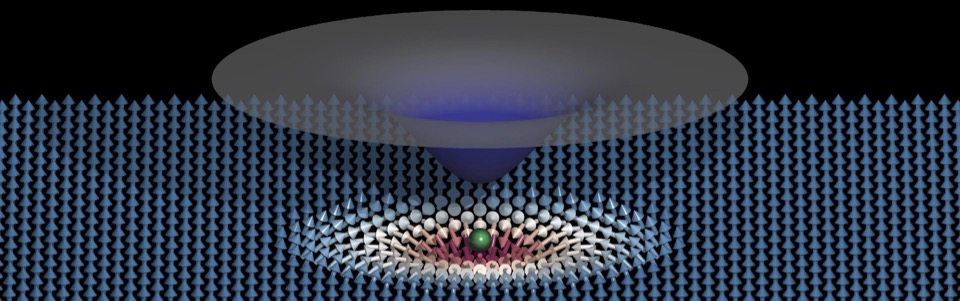
An important ingredient in nanosciences are foreign atoms intentionally deposited on a material to build all kind of nanostructures. The goal of this lecture is to go through the basics physics principles dictating the electronic and magnetic properties of such nanostructures. We will explore various theoretical models and descriptions and provide an overview of some of the current goals in the related highly active research field. We will address the following topics:
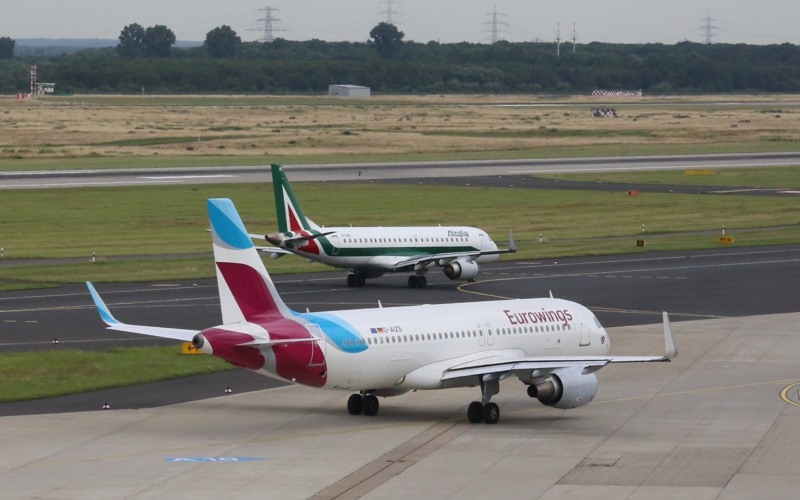
In der Vorlesung Physik der Luftfahrt wird sowohl auf die Physik des Fliegens eingegangen, als auch auf die heutige Abwicklung des Flugverkehrs und verkehrliche Aspekte.